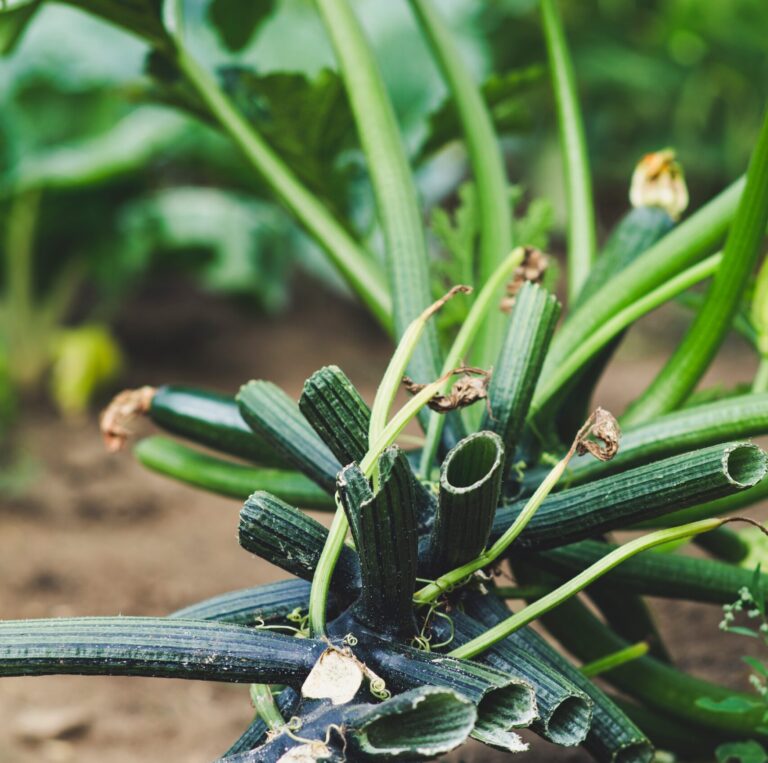
The courgette represents one of the most important horticultural productions; this cucurbitaceae has different product characteristics related to the color of the fruit. In the production areas of Northern Italy The crop cycle can be carried out in protected cultivation (cold tunnel) and in the open field. In protected crops, transplants begin in February/March counting on greater precocity for the more high-tech tunnels which better protect the crop from cold returns. A second period of transplanting starts after mid-August to arrive at harvesting the product in autumn.
Problems
The courgette can be attacked by various pests: aphids, spider mites, thrips and whiteflies. Integrated biological defense management is based on reliable techniques which over the years have allowed producers to rationally solve the problems that have arisen. It is clear that the premise for obtaining results that meet expectations is represented by overall strategies that take into consideration the crop in its entirety, without living from day to day and then having to improvise without reaching the desired results. The application of these techniques starts from afar, bearing in mind that every action performed on the crop so that the combination of chemical treatments and the use of biological techniques results in a true integration, where the synergy of the techniques put in place can be exploited to the fullest.
Afids
The main phytophagous for the courgette is the aphid. This category of insects can give rise to massive infestations that cause serious problems for producers in various ways: weakening of the plants, emission of honeydew that stains the fruits and transmission of virosis with specific reference to the summer/autumn cycles in protected cultivation. In particular, this last aspect has taken on an important importance in recent years when, from the summer onwards, numerous cases of crops that went into crisis due to the widespread presence of virosis were reported; the transmission of the virosis is particularly harmful if it occurs on recently transplanted young seedlings.
Having made these considerations, it is evident that the defense must start at the first presence of winged aphids that bring the pest to the crop; the preference is to be accorded to specific systemic aphids which are therefore able to completely protect a plant which, due to its morphology, offers a lot of shelter to pests which form dense colonies on the underside of the leaves. In fact, the major problems for the defense arise from the difficulty of reaching an adversary well protected by the vegetation and from the remarkable ability that it shows to select populations tolerant to the active substances gradually employed.
Red spider mite
Tetranychus urticae it is the typical red spider mite of vegetable crops which takes advantage in particular of hot, dry environmental conditions.
Ormai da diversi anni la base della difesa delle ortive da questo fitofago è rappresentata dalle introduzioni in campo (lanci) dell’acaro predatore Phytoseiulus persimilis, che una volta insediatosi, è in grado di limitare efficacemente lo sviluppo del ragnetto.
In protected cultivation the launches must start at the first discovery of a spider mite and lead to the introduction of 10-15 specimens per square metre; in recent years the throwing technique has expanded to the open field with early throwing experiences for a total of 4-6 phytoseiids per square metre. The phytoseiid is a predator with a great research capacity which, however, must be put in a position to be able to move easily on the crop (it does not fly because it is a spider), so it is good to start launching when the plants touch each other or when there is at least mulch on which phytoseiids can move from one plant to another in search of prey.
If outbreaks of infestation with a high presence of spider mites start and the phytoseid launch program has already started, it is advisable to intervene with an acaricide with localized treatments.
Tripidi
The courgette plant tolerates the presence of the Frankliniella occidentalis thrips well which generally does not damage the fruit. Frankliniella occidentalis che in genere non danneggia il frutto.
In general, the presence of thrips on zucchini in protected cultivation is effectively managed using the launches of the predatory phytoseiid mite Amblyseius cucumeris secondo diverse modalità:
1 – the phytoseids introduced (in two launches) starting from dispersing material contained in plastic bottles offer a faster action and are better suited to summer growing conditions;
2 – l’impiego di sacchetti (bags) a rilascio progressivo si lasciano preferire in primavera per introduzioni preventive.
In ogni caso occorre raggiungere i 100-150 individui per metro quadrato.
Aleurodidi
At the end of summer in protected cultivation it is possible that whiteflies appear on the zucchini (Trialeurodes vaporariorum for the areas of Northern Italy). Generally they do not represent a problem because in any case they are limited by the treatments carried out on the crop with aphids.
If it is necessary to deal with large populations, it is possible to resort to specific treatments or implement integrated defense plans based on the use of the predatory phytoseiid mite Amblyseius swirskii at a dose of 50-80 individuals/m² introduced in 1-2 launches. This technique assumes particular importance when the crop develops in medium-long cycles (March-September), so much so that in some cases the predator has proved to be an indispensable resource to deal with the pest.
The courgette has numerous pests that can be rationally managed provided you act with care, making sure that their infestations do not take on considerable dimensions. It is therefore necessary to constantly monitor the crop to immediately start the control strategy at the first discovery.
The combination of treatments with crop protection products and the use of biological techniques, in integrated defense strategies, can give rise to rational and effective synergies.